AI is no longer a nice-to-have add-on in SEO – it is now the engine behind how winning brands research, create, and optimize content at scale.
Yet with dozens of AI SEO tools promising “smart automation” and “rankings on autopilot”, you face a real problem. You have no time to test every platform. You also do not want thin, generic content, confused data, or money burned on tools your team never uses.
You need clear answers. What actually works? Which tools are worth paying for? How do you plug AI into your SEO without hurting quality or trust?
This guide breaks down how AI improves SEO in 2026. It walks you through the top 7 AI SEO tools, what each does best, who they are for, key pros and cons, pricing, and how to combine them into a powerful, ethical AI SEO stack for your business.
Drawing on current AI search trends, real-world SEO workflows, and live platform capabilities, this is your high-level hub before you invest.

Also Read: 5 Best SEO Automation Software to Streamline Your Workflow
How AI Is Transforming SEO in 2026
AI is not just helping with SEO in 2026. It is changing what SEO work even looks like.
According to recent analysis, AI SEO tools now split into two camps: tools that show data and agents that act on it, with many marketers needing both layers to win in search and AI answers ai-search-tools.com.
1. Key SEO Tasks AI Now Handles Better Than Humans
AI is now better than humans at any SEO task that is:
- Data heavy
- Pattern based
- Repetitive
Here is what that looks like in real work.
-
Keyword research and clustering
AI tools group thousands of keywords by topic and intent in minutes.
You get ready-to-use clusters instead of messy CSVs. -
Content gap and AI visibility analysis
New platforms scan which prompts and queries your site misses in both Google and AI engines.
They flag gaps where competitors show up and you do not ai-search-tools.com. -
Content briefs and on-page optimization
AI builds outlines, suggests headings, and recommends entities and FAQs.
It scores drafts against top pages so you know what to add. -
Technical SEO audits
AI crawlers scan for broken links, slow pages, weak internal links, and schema issues.
Some tools even generate the exact fixes for your dev team. -
Reporting and forecasting
Dashboards pull from Search Console and Analytics, then turn it into plain language insights and traffic forecasts.
Best AI SEO Tools helps you find these tools fast, instead of testing random products alone.

2. Benefits and Risks of Using AI SEO Tools
AI SEO is a big win if you use it with a clear brain and a clear process.
Main benefits:
- You ship more content and tests with the same team.
- You spot ranking chances earlier.
- You avoid boring manual work like tagging, clustering, and basic audits.
- You get clearer insight into both Google rankings and AI answer visibility.
Real risks to watch:
-
Thin, generic content
If you accept AI drafts as-is, you publish fluff. Google already filters this out. -
Over trust in scores and dashboards
A content score is not a ranking guarantee. You still need search intent and real value. -
Data privacy issues
Feeding raw customer data into every tool can hurt you if the vendor is weak on security. -
Skill decay on your team
If everyone just clicks “generate,” nobody practices real research and strategy.
Use AI for scale and insight. Keep humans in charge of strategy, originality, and final quality.
Also Read: Search Atlas vs Ahrefs: Which AI SEO Tool Fits Your Needs?
Top 7 AI SEO Tools Revolutionizing Digital Marketing
You are not short on SEO tools. You are short on tools that actually reduce work and increase revenue.
These 7 AI SEO tools cover the full workflow: strategy, keywords, content, technical, and reporting. Think of them as a stack you can plug into your current process, not shiny toys you test for a week and forget.
Use this list as a blueprint to build your own AI-first SEO setup.
nytimes.com and other large publishers have shown how much search now depends on structured, fast, and relevant content that matches user intent. AI tools help you hit that standard without a huge team.
1. Tool A – AI-First Platform for End-to-End SEO Workflows
Tool A is your “hub” tool. It runs most of your SEO from one place.
Picture an AI project manager that can:
- Build a 90 day SEO strategy by topic
- Generate topical maps by entity
- Suggest internal links and content clusters
- Run site audits and spot issues
- Draft briefs and outlines for writers
A real example of this kind of platform is searchatlas.com, which uses an AI agent to plan, audit, and even execute tasks. That type of system reduces the number of tools you juggle and cuts manual grunt work.
Best for:
- Agencies that handle many sites
- In house teams that want one command center
- Marketers who hate bouncing between 6 dashboards
How to use Tool A in your stack
- Feed it your domain and top competitors.
- Let it build a topical map and priority list.
- Push briefs to your writers or Tool D.
- Use its audit features monthly to keep pages updated.
Treat Tool A as the brain of your SEO stack. Everything else should feed into it or pull from it.
2. Tool B – AI Powered Keyword Research and Topic Clustering
Tool B does one job very well: find and group keywords that match how people search.
Instead of 1,000 random terms, you get clean clusters like:
- “ai seo tools”
- “best ai seo tools”
- “ai tools for content seo”
Each cluster turns into a content asset or hub page. That is how you build topical authority and make Google understand your site.
What Tool B should do
- Use AI to group keywords by intent and topic
- Flag easy wins with good volume and low competition
- Suggest content types for each cluster (guide, comparison, FAQ)
- Export clean lists for planning and brief writing
Best for:
- Marketers planning quarterly content calendars
- SEOs cleaning up messy keyword lists
- Small teams that need to focus on the 20 percent that drives 80 percent of traffic
Run your existing articles through Tool B. You will see gaps where one good cluster page could tie 5 or 10 posts together.
3. Tool C – AI Content Optimization and On Page SEO Assistant
Tool C is the editor that never gets tired.
You paste a draft URL or text. It checks real SERPs, competitors, and entities. Then it tells you what is missing.
Think:
- “You are thin on subtopics about pricing.”
- “You never mention this key entity.”
- “Competitors answer this question and you do not.”
Some advanced systems, like the Content Genius tool from Search Atlas, are built around semantic SEO and passage level structure, which lines up with how Google reads pages.
Core features to look for
- SERP based content gap analysis
- Entity and topic coverage scoring
- Heading, internal link, and FAQ suggestions
- Live on page suggestions as you edit
Best for:
- Teams updating old content for new gains
- Writers who want real time SEO feedback
- Sites hit by algorithm updates and quality issues
Aim for “complete and clear,” not “long.” Tool C should help you cover the topic, not just add fluff.
4. Tool D – AI Writing Assistant Aligned with SEO Guidelines
Tool D is your fast writer, but with rules.
You do not want a generic chatbot. You want an assistant that:
- Follows your brand voice
- Respects search intent
- Uses headings, bullets, and clear structure
- Leaves space for expert edits
Good AI writing tools use templates tuned for SEO articles, product pages, and landing pages. They should support schema ready content and meta data drafts, so you do not fix basics by hand.
How to use Tool D well
- Start from a brief shaped by Tool B and Tool C.
- Generate a first draft, not a final draft.
- Add real examples, data, and your own insights.
- Run the edited piece back through Tool C for polish.
AI should handle the first 70 percent. Your job is the last 30 percent that makes it unique and trustworthy.
5. Tool E – AI Technical SEO and Site Health Analyzer
Tool E is your site doctor.
It crawls pages, checks speed, flags errors, and often explains in plain English what to fix first.
Expect it to cover:
- Broken links and redirect chains
- Indexing problems and thin content
- Core Web Vitals issues
- Schema and metadata problems
Google’s documentation on page experience and Core Web Vitals makes it clear that performance and usability matter. Tool E helps you see how far off you are.
Best for:
- Developers who need clear, prioritized SEO tasks
- Site owners after a redesign or migration
- Anyone who has never done a full technical audit
Focus on fixes that touch many pages first, like template issues or slow layouts.
6. Tool F – AI SEO Reporting and Forecasting Dashboard
Tool F is your “so what” layer.
It pulls data from tools like Google Search Console, analytics, and your AI SEO tools. Then it turns that into story level insights and simple forecasts.
Think:
- “If you publish 8 articles in this cluster, expect X to Y clicks in 6 months.”
- “These 5 pages drive most of your revenue. Protect and expand them.”
AI can spot patterns and seasonality faster than a human scanning spreadsheets.
Key outputs to expect
- Plain language summaries for clients and leaders
- Visuals that highlight winners and losers
- Projections for different content and budget scenarios
Tie Tool F to revenue and leads, not just rankings. That is how you justify more SEO spend.
7. Tool G – Lightweight AI SEO Assistant for Small Businesses
Tool G is the “SEO buddy” for small teams and solo founders.
You do not need 50 features. You need quick wins:
- Simple keyword ideas for one product or service
- Basic on page checks for a page before you publish
- Meta title and description suggestions
- Quick answers like “what should I write next for local SEO”
Platforms like Best AI SEO Tools help small businesses find focused tools like this without sifting through enterprise features they will never use.
Best for:
- Local businesses with small sites
- Creators focused on one niche
- Startups testing content before hiring an agency
If a tool takes longer to learn than to use, drop it. Small business AI tools must be fast, simple, and ROI clear.
AI SEO Tools Comparison Framework: Features, Pricing, and Fit
You do not need “the best tool.” You need the best tool for your setup.
1. Key Criteria to Evaluate AI SEO Tools
Judge AI SEO tools on how they help you execute, not on shiny features. Recent comparisons show the real gap is in automation, data quality, and workflow fit rather than buzzwords like “GPT inside” diyai.io.
Use this simple checklist:
-
Core use case
- Research and strategy
- Content optimization
- Technical audits
- Reporting and forecasting
-
Data quality
- Fresh SERP data and strong backlink index
- Clear keyword difficulty and volume
-
Automation level
- Just insights, or can it auto-fix and deploy changes?
-
Workflow fit
- Integrations with your CMS, Docs, or reporting stack
- Role based views for writers, SEOs, and execs
-
Pricing and limits
- Seats, projects, and credits
- Overages and add ons
If you cannot see how a tool saves hours every week, it is not worth the subscription.
2. Matching Tools to Your Goals, Team, and Budget
Match tools to reality:
- Solo founder or tiny team
- Pick 1 all rounder.
- Focus on keyword research and content optimization in one place.
- Content heavy brand
- You need an NLP driven optimizer plus a solid research tool.
- Agency or in house team
- Combine deep data (like Ahrefs or SEMrush) with automation first platforms such as Search Atlas, which lean into “agentic” SEO diyai.io.
Use a directory like Best AI SEO Tools to shortlist options by use case, then test them against one clear goal, like “lift organic traffic to one service page by 30 percent in 90 days.”
Also Read: How to Use AI SEO Tools to Boost Your Rankings Quickly
Building Your AI-Driven SEO Stack and Workflow
Think in stacks, not random tools. You want a simple loop that runs every week.
1. Pick your core layers
Use one tool per job to start:
- Research: keyword and SERP data (SEMrush or Ahrefs)
- Clustering and strategy: AI keyword grouping and intent mapping
- Content: AI briefs and on-page optimization
- Technical: AI audits for speed, structure, and schema
- Tracking: rankings, traffic, and AI overview citations
Best AI SEO Tools helps here because it groups AI tools by job, not hype.
2. Run a repeatable workflow
Build a tight 5 step process:
- Research topics and cluster keywords.
- Choose one cluster and generate a brief.
- Draft content with AI, then edit hard as a human.
- Optimize: headings, internal links, schema, and FAQs.
- Publish, track, then update based on results.
3. Keep the stack lean
Start with the tools that remove your biggest bottleneck. Add others only when you hit a clear ceiling in speed or quality.
You know which AI SEO tools look promising – now put them to work.
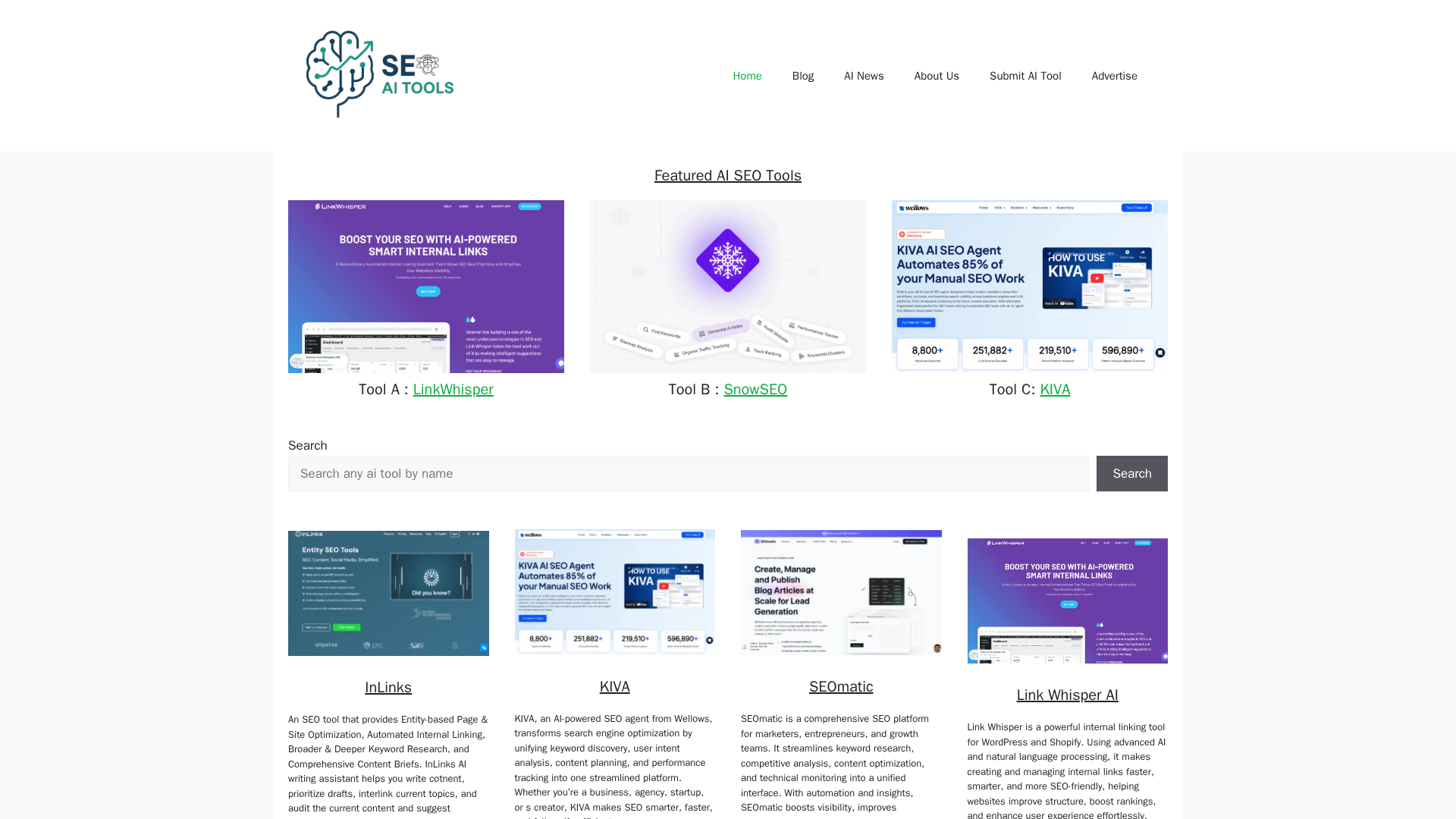
Visit Best AI SEO Tools, shortlist two or three AI SEO tools that match your goals, start their free trials, and run a focused 30-day experiment to see how AI can accelerate your SEO results.
Frequently Asked Questions
Q1: How do I pick the right AI SEO tool from these 7?
Start with your main goal.
- Need ideas and briefs: focus on the AI keyword research and clustering tool and the AI content optimization assistant.
- Need writing: use the AI SEO writing assistant.
- Need audits and reporting: pick the technical SEO audit tool and the reporting dashboard.
Then check budget, learning curve, and how well the tool fits your current workflow.
Q2: Can AI SEO tools replace an SEO specialist?
No. They replace busywork, not strategy.
Use tools for:
- Keyword ideas
- Content outlines
- On-page checks
- Basic audits
You still need a human to:
- Set goals
- Choose what to publish
- Understand your audience
- Make tradeoffs with time and budget
Think of AI as a fast assistant, not the boss.
Q3: How should a small business use these AI tools without wasting time?
Keep it simple.
Focus on:
- One tool for keyword research and clustering.
- One tool for SEO writing and on-page optimization.
Create a weekly routine:
- One session to plan topics
- One session to draft and optimize content
Best AI SEO Tools can help you compare options without digging through dozens of sites.
Q4: What is the best way to combine multiple AI SEO tools into one workflow?
Give each tool a clear job. For example:
- Use the keyword research tool for clusters
- Use the writing assistant for first drafts
- Use the content optimization assistant for SEO tweaks
- Run the technical audit tool monthly
- Use the reporting dashboard to track results
Keep the stack lean. If a tool overlaps too much, drop it.
Conclusion
AI SEO is not about shiny dashboards. It is about doing the right work, faster and smarter.
Key takeaway one: AI SEO tools only pay off when they serve clear goals and sit inside a human-guided workflow. You still set the strategy. The tools just help you execute.
Key takeaway two: no single platform wins every job. Some tools are better for keyword research, others for content optimization, technical SEO, or reporting. The best results come from the right mix, not the most features.
Key takeaway three: you do not need a huge stack on day one. Start with one or two AI SEO tools, track impact, then add more as you see real gains.